

While energy prices climb and the shadow of inflation looms once again over the European economy, Brussels faces a nightmare they failed to foresee. The effective blockade of the Strait of Hormuz, following recent military conflicts in the region, has exposed a painful gap in European strategy. The EU was caught sleeping, unable to manage the crisis in one of the world's most vital maritime arteries. With one-fifth of the global oil flow remains trapped, the fear of a total "market blackout"—which could trigger a new wave of high costs and shortages in basic goods and food—is now forcing the Union's leadership into a desperate search for last-minute solutions.
Discussions upon... discussions
The High Representative of the European Union for Foreign Affairs and Security Policy, Kaja Kallas, stated that the bloc plans to discuss what EU member states can do on their part to help open the Strait of Hormuz, a critical sea route for global oil supplies. "It is in our interest for the Strait of Hormuz to remain open, and that is why we are also discussing what we can do about it," she noted. Kaja Kallas is encouraging member states to redirect the EU's naval mission in the Red Sea to help restart oil and gas shipments through Hormuz. "If we want to have security in this region, it would be easier to use the operation we already have in the area and perhaps modify it slightly," Kallas said before a meeting of EU foreign ministers.
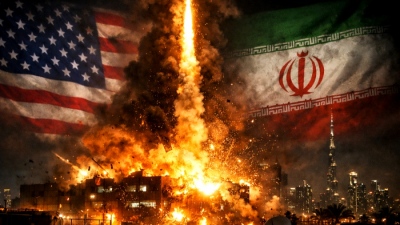
The EU operation she refers to is "Operation Aspides," launched in 2024 following Houthi attacks on merchant ships in the Red Sea. Officials are now debating whether the EU could transfer this mission to Hormuz, which has essentially closed since the US and Israel attacked Iran. Foreign ministers will discuss today (March 16, 2026) "if it is indeed possible to change the mandate of this mission," Kallas stated.
Skyrocketing energy prices
The blockade of Hormuz has sent energy prices soaring, causing concern among European officials regarding inflation, economic slowdown, and even food supply disruptions. Approximately one-fifth of the world's oil passes through this narrow passage. Beyond the potential shift of "Operation Aspides," countries are also considering the creation of a "coalition of the willing" operation, Kallas reported. "We also need to see what would be the fastest way to open the Strait of Hormuz," she added.
France and Italy in talks with Iran
At the same time, European diplomats (primarily from France and Italy) are attempting to negotiate a "silent truce" with Iran specifically for navigation, offering in exchange the easing of certain sanctions on humanitarian goods. However, the problem is not only whether ships can pass, but whether they can be insured. Lloyd’s of London has placed the Strait on the "red list," with war risk premiums having increased by 500%. Without state guarantees from EU countries (such as Greece and France), no large tanker is willing to risk the passage.
The equation has been complicated by the vocal intervention of German Foreign Minister Johann Wadephul, who—speaking to the ARD network—appeared extremely skeptical about expanding the mission, describing the current action of "Aspides" in the Red Sea as "ineffective." "For this exact reason, I doubt whether extending the mission to the Strait of Hormuz would offer greater security," he emphasized, effectively undermining the planning from Brussels.
Trump's ultimatum on Hormuz
Meanwhile, one country after another is rejecting the ultimatum of US President Donald Trump regarding Hormuz, who warned that NATO faces a "very bad future" if allies do not support Washington's effort to keep Hormuz open, as the Middle East crisis continues to affect energy markets and international navigation. Specifically, the German stance aligns with the categorical refusal of France. Paris made it clear that it does not intend to follow the... prompting of US President Donald Trump and send ships to the Gulf, seeking instead to maintain open channels of communication with Tehran and avoiding alignment with the White House's aggressive rhetoric.
Japan also clarified today (March 16, 2026) that it "does not plan" to conduct or participate in a military operation to guarantee the safety of navigation. Given "the current situation in Iran, we do not plan to order a navigation security operation," the Defense Minister stressed to the Japanese Parliament. Similarly, Australia's Transport Minister stated today that the government of Prime Minister Anthony Albanese does not intend to send any warships to the straits. "We will not send a (war)ship to the Strait of Hormuz. We know how important it is, but this is not something we have been asked for, nor something we are contributing to," Catherine King told the national network ABC.
www.bankingnews.gr





Σχόλια αναγνωστών